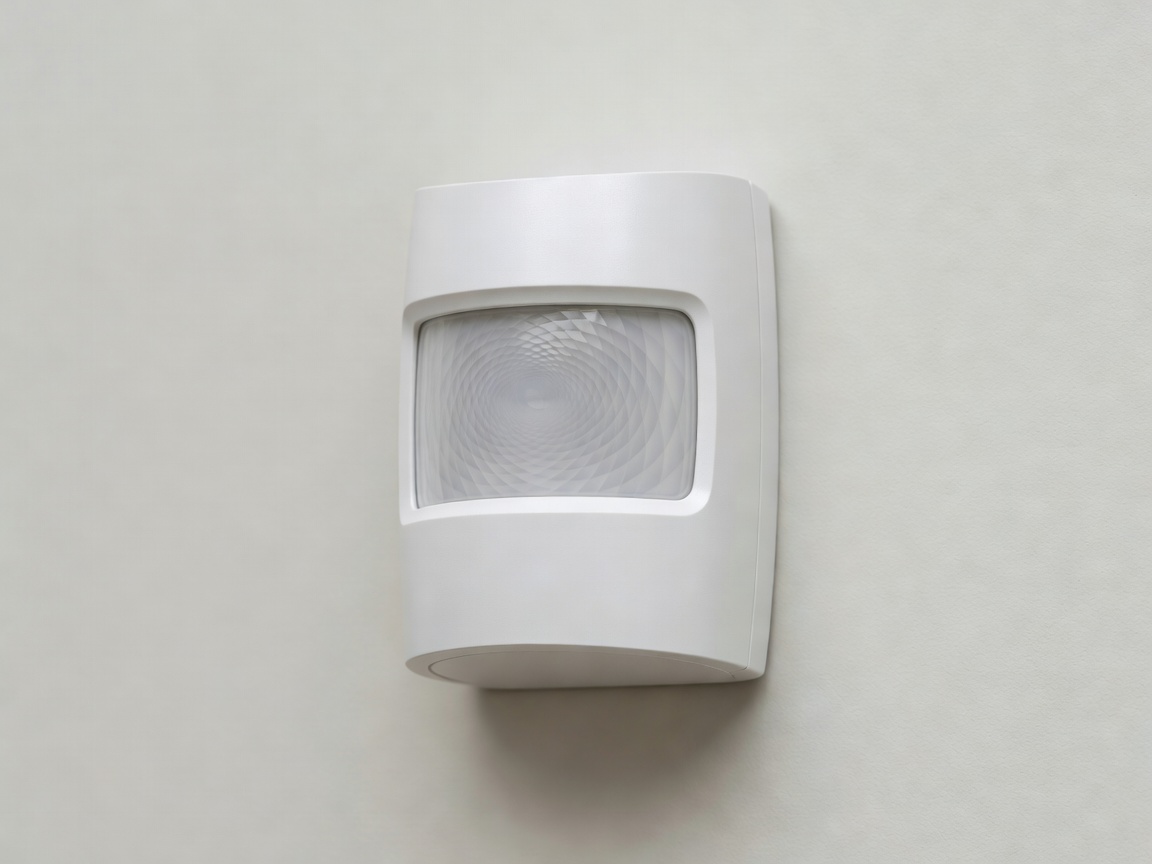
The Foundation of Interior Automation
Indoor motion sensors are the central nervous system of any smart building or home automation setup. Unlike their outdoor counterparts, which must contend with severe weather, temperature swings, and wildlife, indoor units are engineered for high sensitivity in controlled environments. The primary goal of an indoor sensor is to balance rapid detection with the strict avoidance of false positives, which can disrupt comfort or trigger unwarranted security alerts.
There are three major technological categories dominating the indoor market: Passive Infrared (PIR), Microwave (MW), and Dual Technology. Understanding how each operates is essential for making an informed purchasing and installation decision.
Passive Infrared (PIR)
PIR technology is the most common and cost-effective solution for residential indoor sensing. Rather than emitting energy, PIR sensors passively detect the infrared radiation (heat) emitted by humans and animals. When a warm body moves across the sensor's segmented field of view, the device registers a rapid change in infrared energy and closes a circuit.
Pros and Cons of PIR
- Pro: Extremely low energy consumption, making them ideal for battery-operated wireless setups.
- Pro: Highly affordable and widely compatible with standard smart home hubs (Zigbee, Z-Wave).
- Con: Can be triggered by rapid temperature changes, such as placing them directly above an HVAC register or facing a window that receives intense, sudden direct sunlight.
- Con: Cannot "see" through glass or thin partitions.
Microwave Sensors
Microwave sensors operate actively. They continuously emit microwave pulses and measure the reflection off objects in the room using the Doppler effect. If an object moves, the frequency of the reflected waves changes, triggering the sensor. Because they rely on high-frequency radio waves rather than heat signatures, their operational characteristics are vastly different from PIR.
The primary advantage of microwave technology is coverage area and sensitivity. They can detect very minute movements—such as typing at a desk or turning a page—making them excellent for spaces where people remain relatively still for long periods. Additionally, microwave signals can penetrate non-metallic materials like glass, drywall, and thin wooden doors. While this sounds advantageous, it often leads to false triggers from motion in adjacent rooms or hallways if the sensitivity is not properly calibrated.
Dual Technology Sensors
To mitigate the weaknesses of both PIR and Microwave technologies, manufacturers combined them into Dual Technology sensors. In a typical Dual Tech unit, both the PIR and the Microwave sensor must be triggered simultaneously (or within a very tight time window) to activate the alarm or lighting circuit.
For example, if a sudden draft of hot air triggers the PIR sensor, but the Microwave sensor detects no physical movement, the system remains inactive. Conversely, if the Microwave sensor detects someone walking on the other side of a drywall partition, the PIR sensor will not register the heat signature, preventing a false positive. This logical "AND" gate configuration makes Dual Tech sensors the gold standard for commercial security and high-reliability environments.
Optimal Placement Strategies
Even the most advanced Dual Technology sensor will fail if placed incorrectly. Proper installation geometry is crucial for reliable indoor detection.
- Corner Mounting: Sensors should generally be placed in the corner of a room, facing inward. This maximizes the field of view and ensures that intruders or occupants must cross the detection beams laterally, which is how PIR sensors are most effective.
- Height Matters: Adhere strictly to the manufacturer's height recommendations, typically between 7 and 9 feet. Mounting a sensor too high will create dead zones underneath it; mounting it too low limits its overall range.
- Avoid Thermal Hazards: Never aim a PIR or Dual Tech sensor directly at a radiator, heating vent, fireplace, or large expanse of window glass. Rapid thermal fluctuations are the enemy of infrared detection.
By carefully selecting the right technology for the specific room environment and adhering to strict placement rules, indoor motion sensors can provide years of seamless, invisible automation and security.