Defining the Modes
While the underlying hardware (PIR, Microwave, or Ultrasonic) may be identical, the way a sensor dictates lighting behavior falls into two distinct operational modes: Occupancy and Vacancy. Selecting the wrong mode can lead to either severe user frustration or massive energy waste. The difference lies entirely in how the lights are turned on.
Occupancy Sensors (Auto-On / Auto-Off): These sensors automatically turn the lights on when someone enters the room. As long as motion is detected, the lights remain on. Once the room is vacated and the predetermined timeout period expires, the lights automatically turn off.
Vacancy Sensors (Manual-On / Auto-Off): These sensors require the user to physically press a button on a wall switch to turn the lights on. Once on, the sensor operates identically to an occupancy sensor—keeping the lights on while motion is detected, and turning them off automatically when the room is empty.
The Case for Occupancy (Auto-On)
Occupancy sensors are designed for convenience and safety. They are essential in areas where individuals might enter with full hands, or where finding a light switch in the dark poses a hazard.
- Public Restrooms: Sanitation and convenience make Auto-On the only logical choice.
- Warehouses and Storage Rooms: Workers frequently enter carrying boxes; requiring a manual switch press is impractical.
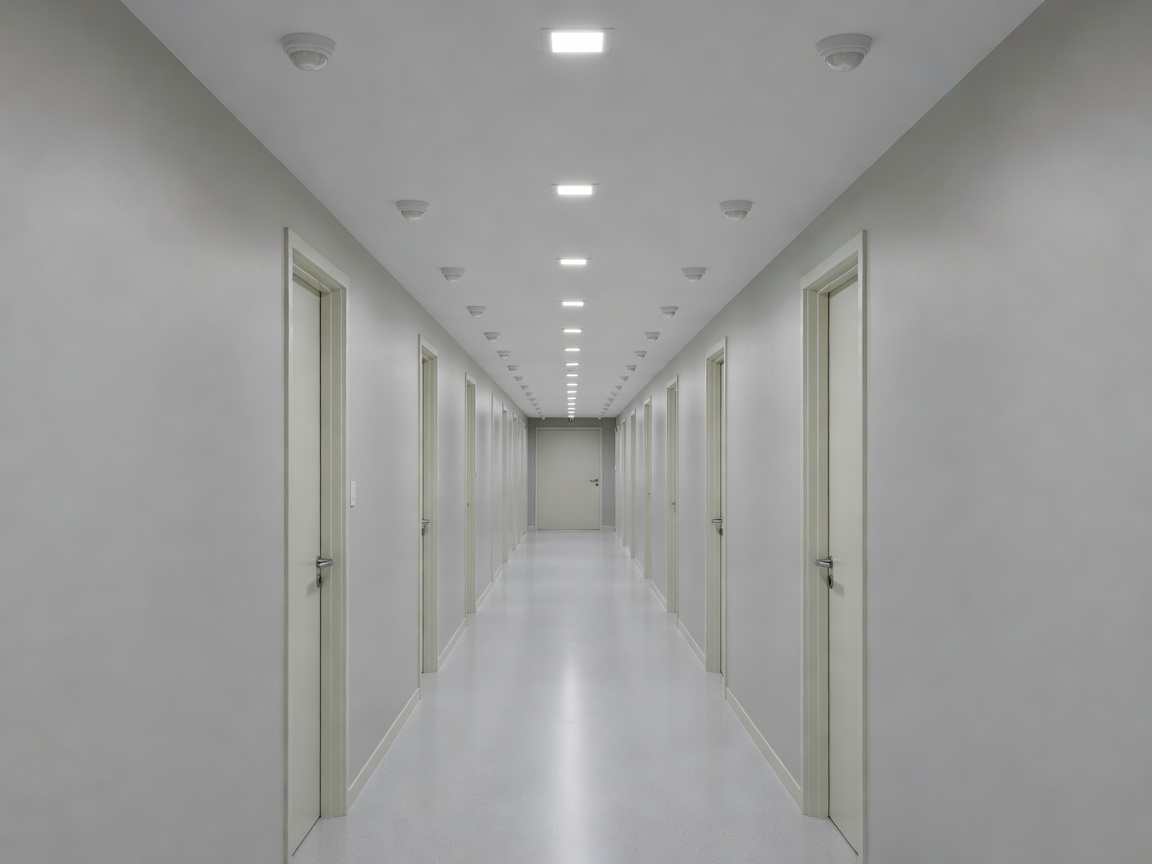
- Hallways and Stairwells: Safety is paramount. A stairwell must illuminate the moment a user pushes through the door to prevent trips and falls.
The Case for Vacancy (Manual-On)
Vacancy sensors are designed strictly for maximum energy efficiency. They rely on the psychological reality that people do not always need artificial light when entering a room. If an office has large windows and it is a bright afternoon, a worker entering the room might not bother turning on the switch. A vacancy sensor respects this choice, saving energy, while still acting as a failsafe to turn the lights off if the worker leaves and forgets to hit the switch.
- Private Offices: Occupants often prefer natural light or desk lamps. Auto-On overhead lights can be disruptive.
- Conference Rooms: When entering a room to set up a projector, the user may explicitly want the lights off. A vacancy sensor allows this manual control while ensuring the room doesn't burn electricity all night after the meeting ends.
- Bedrooms: In residential settings, Auto-On sensors are disastrous in bedrooms, potentially blinding a user who just gets up for a glass of water at 3:00 AM.
Building Codes and Compliance
The choice between occupancy and vacancy is rarely left entirely to preference in commercial construction. Strict energy codes govern sensor deployment to curb electricity waste in unoccupied commercial real estate.
Standards such as California's Title 24, as well as ASHRAE 90.1 and the IECC (International Energy Conservation Code), mandate the use of Vacancy (Manual-On) sensors in most enclosed spaces, including private offices, conference rooms, and break rooms. Occupancy (Auto-On) modes are explicitly restricted to spaces where manual operation would endanger safety, such as corridors, stairwells, and restrooms.
Understanding the distinction between these two operational logics ensures compliance with modern energy laws, minimizes facility electricity costs, and maximizes occupant comfort.