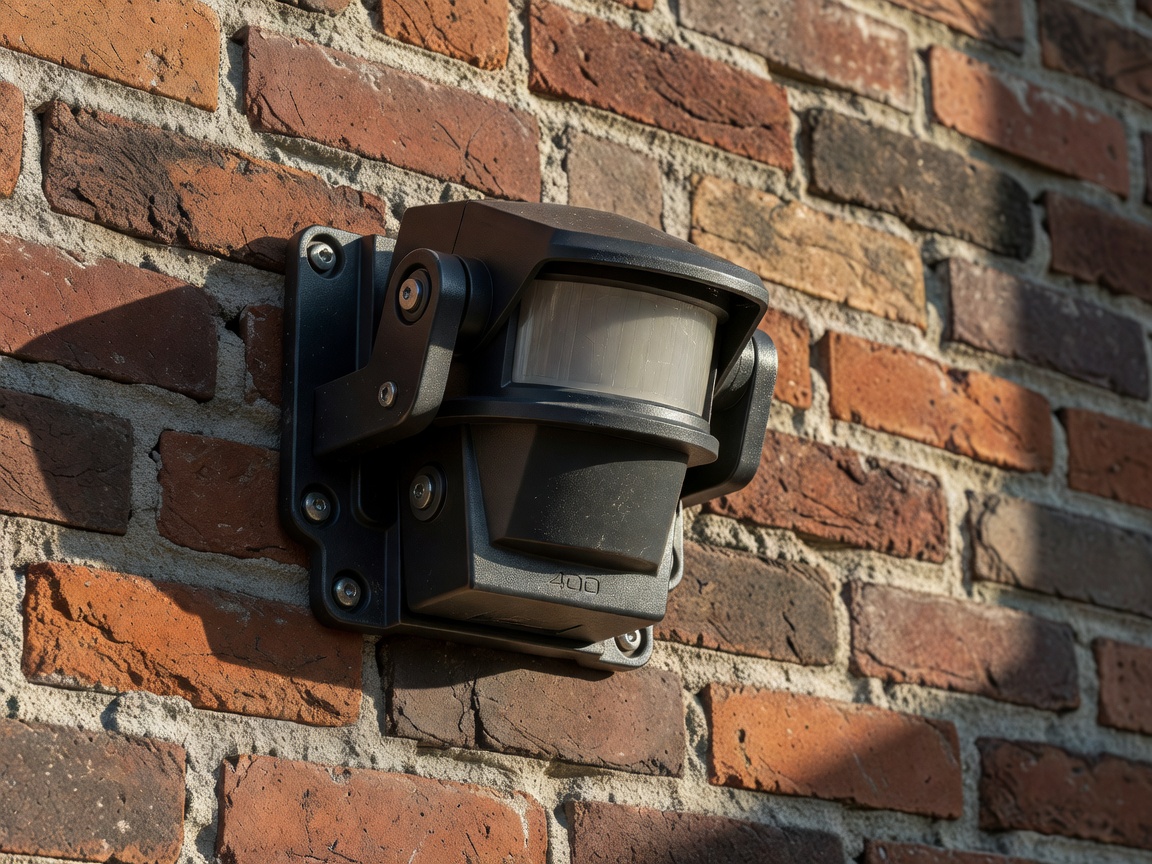
The Harsh Reality of Exterior Environments
Deploying motion sensors outdoors introduces a complex set of variables that indoor systems never encounter. An outdoor sensor must reliably operate through torrential rain, freezing temperatures, dense fog, and direct sunlight, all while ignoring falling leaves, passing headlights, and local wildlife. Failing to account for these environmental stressors leads to "alarm fatigue," where frequent false positives train property owners to ignore or disable their own security systems.
Weatherproofing and IP Ratings
The first specification to evaluate for any outdoor sensor is its Ingress Protection (IP) rating. The IP rating system consists of two numbers: the first indicates protection against solid objects (dust, debris), and the second indicates protection against liquids (water, rain).
- IP54: Protected against dust and splashing water. Suitable for covered porches or deep eaves, but not for fully exposed areas.
- IP65: Protected against total dust ingress and low-pressure water jets from any direction. The baseline requirement for exposed outdoor sensors.
- IP66/IP67: Protected against high-pressure water jets or temporary immersion. Recommended for extreme weather environments or coastal areas prone to severe storms.
Technology Suited for the Outdoors
While Passive Infrared (PIR) is prevalent outdoors, particularly in residential floodlight integration, it requires heavy filtering. Sunlight heating up a concrete driveway or a sudden gust of warm wind can easily trigger a basic PIR sensor. High-quality outdoor PIR units use advanced algorithms and multi-segmented lenses to differentiate between the heat signature of a human and the ambient thermal changes of the environment.
Active Infrared (AIR) systems, often referred to as photoelectric beams, are highly effective for perimeter security. These systems use a transmitter and a receiver positioned at opposite ends of a property line. They create an invisible "fence" of infrared light. When the beam is broken by a solid object, the alarm triggers. AIR systems are highly resistant to false alarms from weather, but they require precise alignment and clear lines of sight, making them vulnerable to overgrown foliage.
Hardwired vs. Wireless and Solar
Power delivery is a significant consideration for outdoor sensors due to the difficulty of routing cable through exterior walls or trenching through landscaping.
| Power Source | Reliability | Installation Difficulty | Best Use Case |
|---|---|---|---|
| Hardwired (PoE / 12V) | Highest | High | Commercial perimeters, permanent residential builds. |
| Battery (Lithium) | Moderate | Low | Sheds, detached garages, temporary monitoring. |
| Solar + Battery | High (if sufficient sun) | Low | Gates, long driveways, off-grid property lines. |
Integration with Security Ecosystems
An outdoor motion sensor is rarely a standalone device; its primary function is to act as a trigger for other systems. When an outdoor sensor detects movement, it should ideally trigger a cascading response: activating perimeter floodlights, signaling PTZ (Pan-Tilt-Zoom) security cameras to focus on the triggered zone, and sending a rich notification to the property owner's device.
To achieve this, the sensor must operate on a protocol compatible with the site's central hub. Z-Wave Plus and Zigbee 3.0 are common for residential setups due to their mesh networking capabilities, which help extend range outdoors. For commercial properties, hardwired relay outputs connecting directly to an alarm panel remain the standard for zero-latency, fail-proof communication.